Sleepmaxxing, sorted by evidence
Sleepmaxxing turns bedtime into a stack of hacks. Some of them have decent research. Some have a single small study. One carries a real safety warning. Here is the stack, sorted.
contentsWhat sleepmaxxing is
Key points
- The habits with the firmest evidence are the least exciting: caffeine timing and evening light.
- Weighted blankets, magnesium, kiwi, tart cherry and yoga nidra each have only small or limited studies.
- A 2025 review found little evidence that mouth taping helps, and a safety risk for people with blocked noses.
- Stacking many hacks at once makes it impossible to tell what is helping.
- A sleep diary is a better first step than a new gadget.
What sleepmaxxing is
Sleepmaxxing is the push to optimize every part of the night. Mouth tape, magnesium drinks, blackout masks, weighted blankets, kiwi, cold bedrooms, sleep trackers, all stacked into one routine and shared on video.
Some of those pieces have good research. Others have one small study. One carries a real warning. We sorted the stack by evidence.
Firm ground
Caffeine timing. A big afternoon dose, 400 mg taken 6 hours before bed, still disturbed sleep in a controlled study.[13] The caffeine calculator shows your cut-off.
Evening light. Light at night shifts the body clock,[17] and reading a light-emitting screen before bed delayed sleep and next-morning alertness compared with a printed book.[16]
Promising but thin
A second tier has real studies behind it, but small or limited ones. Each has its own piece:
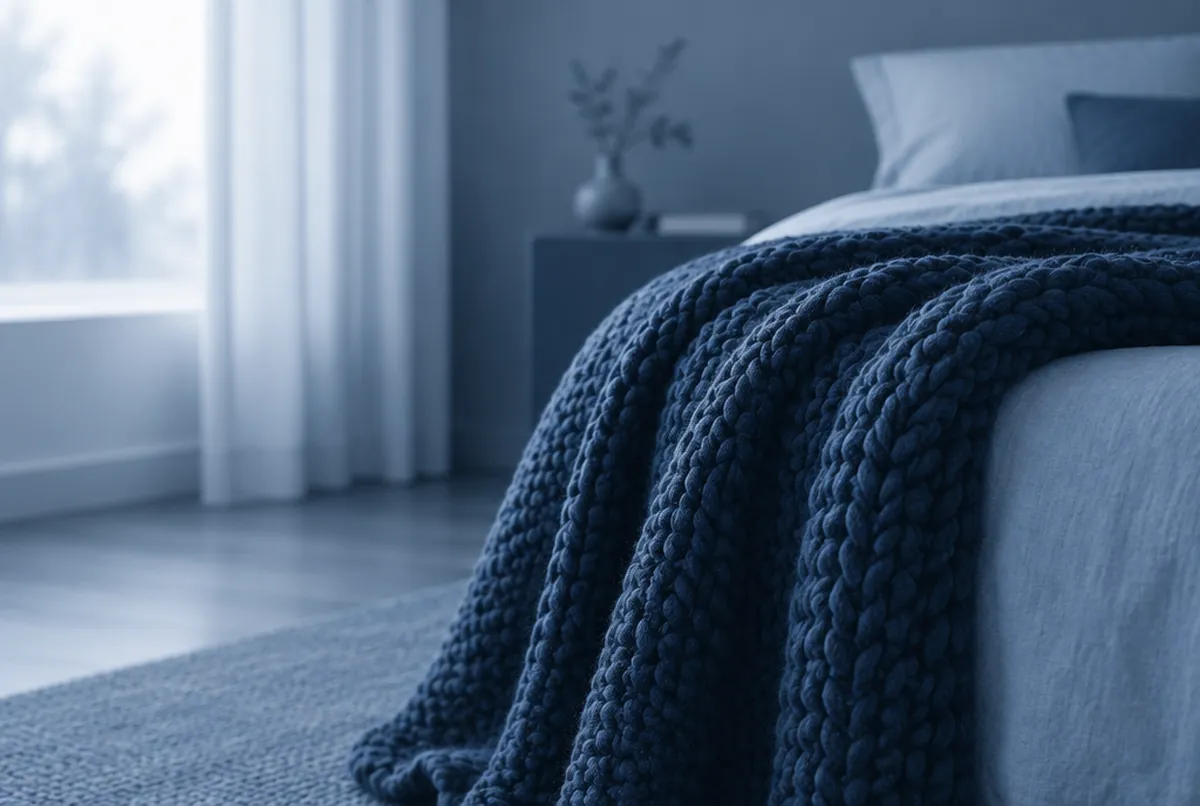
- Weighted blankets: strong self-reported results in people with psychiatric conditions, no change on wrist sensors.[60]
- Magnesium: three trials in older adults, low-certainty evidence.[50]
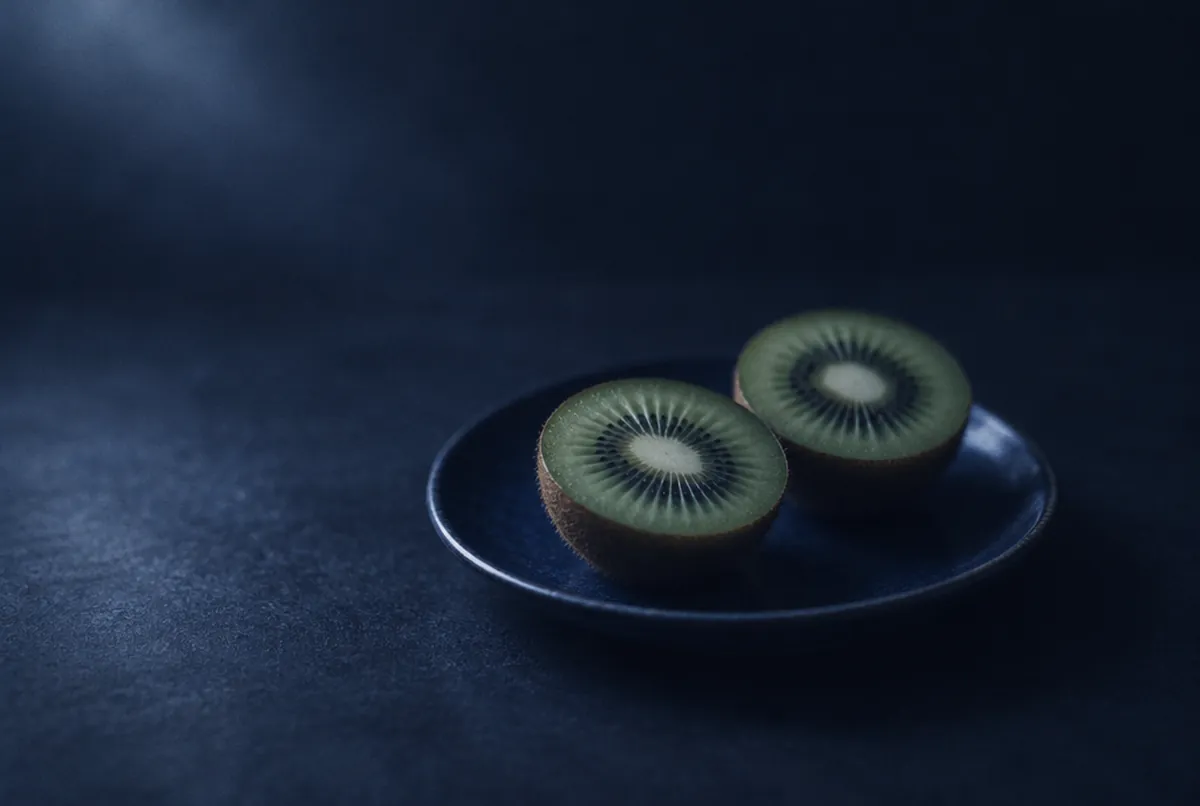
- Kiwi: one study with no control group.[47]
- Tart cherry: one week, 20 people.[49]
- Yoga nidra: six small trials at moderate to high risk of bias.[61]
The one with a warning: mouth tape
Mouth taping is meant to force nose breathing overnight. A 2025 systematic review of 10 studies with 213 people found that 8 showed no evidence it helps mouth breathing, sleep-disordered breathing or sleep apnea. Two suggested a slight improvement in some people with mild sleep apnea.[62]
Four of the studies described a potentially serious risk of not getting enough air in people with significant nasal blockage, from things like hay fever, a deviated septum or enlarged tonsils.[62] If you snore loudly or wake gasping, see a doctor. Do not tape over the symptom.
The full stack, sorted
table · sleepmaxxing, by strength of evidence
| Habit | Evidence | Our take |
|---|---|---|
| Earlier caffeine cut-off | Controlled sleep study | Do it |
| Dimmer, screen-light evenings | Lab study plus reviews | Do it |
| Weighted blanket | One randomized trial, specific group | Optional |
| Yoga nidra, guided rest | Six small trials | Low-risk, worth a try |
| Magnesium, kiwi, tart cherry | Small or low-certainty studies | Optional, mind the doses |
| Mouth tape | Little benefit, safety concerns | Skip without medical advice |
A simpler version
Add habits one by one with notes alongside, or you will never know which one earned its place. Sleep diaries are the standard tool for this in insomnia care.[21] Start with the free sleep diary and the 60-second quiz, then add one habit a week.
Optimize less. Sleep more.
The free list sends every new sleep trend check, sorted by evidence, as it lands.
Sources
- Drake et al., 2013. Caffeine effects on sleep taken 0, 3, or 6 hours before going to bed. Journal of Clinical Sleep Medicine.
- Chang et al., 2015. Evening use of light-emitting eReaders negatively affects sleep, circadian timing, and next-morning alertness. Proceedings of the National Academy of Sciences of the United States of America.
- Blume et al., 2019. Effects of light on human circadian rhythms, sleep and mood. Somnologie.
- Rhee et al., 2025. Breaking social media fads and uncovering the safety and efficacy of mouth taping in patients with mouth breathing, sleep disordered breathing, or obstructive sleep apnea: a systematic review. PLOS ONE.
- Ekholm et al., 2020. A randomized controlled study of weighted chain blankets for insomnia in psychiatric disorders. Journal of Clinical Sleep Medicine.
- Mah & Pitre, 2021. Oral magnesium supplementation for insomnia in older adults: a systematic review and meta-analysis. BMC Complementary Medicine and Therapies.
- Lin et al., 2011. Effect of kiwifruit consumption on sleep quality in adults with sleep problems. Asia Pacific Journal of Clinical Nutrition.
- Howatson et al., 2012. Effect of tart cherry juice (Prunus cerasus) on melatonin levels and enhanced sleep quality. European Journal of Nutrition.
- Dutta et al., 2025. Efficacy of yoga nidra in managing sleep disorders: a systematic review of randomized controlled trials. Journal of Integrative and Complementary Medicine.
- Schutte-Rodin et al., 2008. Clinical guideline for the evaluation and management of chronic insomnia in adults. Journal of Clinical Sleep Medicine (AASM).
This article is educational and isn’t medical advice. It was written and checked by the UNWIRE™ editorial team; no clinician has reviewed it yet. UNWIRE™ is a nutrition company, and this article does not describe any product.
Pass it on
Ask us about this article
Something here unclear, or a question it didn’t answer? Write it below. The button opens your own email app with the question ready to send to support@tryunwire.com. We answer by email, and we may publish good questions as edited Q&As, with names and personal details taken out.